Your Smart Guide to Advertising in Real Estate
Real estate advertising, at its heart, is all about connection. It's making sure the right people see the right property at just the right time. This means blending smart digital strategies, like ads on Google and social media, with time-tested traditional methods, like yard signs and open houses, to find buyers wherever they are. Real success comes from knowing your audience inside and out and using the right mix of channels to bring a property's story to life.
Getting Started with Your Real Estate Advertising
So, you've got a fantastic property on your hands. Now what? The challenge of getting it in front of the right buyers can feel a little much, especially when you're trying to figure out where to spend your advertising budget.
Let’s break down the main advertising channels in a way that actually makes sense. Think of it like a toolbox. You have a whole set of tools at your disposal, and each one is designed for a specific job. You wouldn't use a hammer to saw a board, right? It’s the same thing here.
Digital and Traditional: The Tools of the Trade
On one side of your toolbox, you have your digital tools. This includes powerhouses like Google Ads, Facebook, and Instagram. These platforms are amazing for targeting very specific groups of people—whether that’s first-time homebuyers in Kelowna or someone actively searching for a luxury lakeside home in Penticton.
On the other side, you have your traditional tools. These are the classics, the ones that have been working for decades for a good reason:
-
For Sale Signs: The original hyper-local ad. They’re simple, effective, and catch the eye of anyone driving through the neighbourhood.
-
Local Magazines & Print: Perfect for showcasing high-end properties to a niche, local readership with a keen interest in the community.
-
Open House Events: Nothing beats letting people experience a home firsthand. It’s an interactive ad that creates a powerful emotional connection.
Knowing which tool to pull out for which job is the secret sauce. A slick Instagram video might be perfect for a trendy new condo, while a beautifully designed ad in a local publication could be the ideal approach for a sprawling estate in Vernon.
Here’s a quick look at the most common advertising channels and where they shine.
Your Real Estate Advertising Toolbox at a Glance
| Advertising Channel | Best For Reaching… | Key Advantage |
|---|---|---|
| Google Ads | Buyers actively searching for properties with specific criteria. | High-intent audience; you show up the moment they're looking. |
| Facebook/Instagram Ads | Potential buyers based on demographics, interests, and behaviour. | Incredible targeting capabilities and visual storytelling. |
| Property Portals (Zillow, Realtor.ca) | A broad audience of motivated buyers already in the market. | High-traffic platforms where buyers expect to find listings. |
| For Sale Signs | Hyper-local audience (neighbours, passersby). | Low-cost, high-visibility advertising in the target area. |
| Print & Local Media | Niche demographics and older, affluent audiences. | Builds local credibility and reaches non-digital-first buyers. |
| Open Houses | Highly engaged local buyers ready to see a property in person. | Creates a personal connection and sense of urgency. |
Each of these channels plays a unique role, and the most effective strategies often use a combination of them to cover all the bases.
Understanding the Buyer's Path
We also need to talk about the 'buyer journey.' I know, it might sound like marketing jargon, but the idea is simple. It's the path someone takes from casually scrolling through listings on their phone to signing the final papers.
Think of it this way: people don't just wake up one morning and decide to buy a house that day. They browse, they dream, they research… and then they get serious. Your advertising needs to meet them at each of those steps.
Early on, when a potential buyer is just looking for inspiration, a beautiful blog post about neighbourhood amenities or a lifestyle-focused video ad can plant a seed. Later, when they're actively searching, a Google Ad for "3-bedroom homes in West Kelowna" can capture their attention at the perfect moment.
Understanding this path helps you choose the right ad for the right time, making your advertising dollars work smarter. This is the foundation for everything that follows. If you're ready to get strategic, our team can help you build that map. Let's chat about a plan that fits your needs.
Getting to Know Your Ideal Home Buyer
Advertising to everyone is advertising to no one. It's an old cliché, but it’s so true in real estate. A generic ad just gets lost in the noise, especially in a competitive market like the Okanagan.
So, how do you make your advertising actually connect with people? You have to get crystal clear on who you're talking to.

Creating Your Buyer Personas
Think about your latest listing. Is it a sprawling family home near great schools in West Kelowna? Or is it a sleek condo in Vernon with stunning lake views? The person looking for one probably isn't the same person interested in the other.
This is where creating a simple buyer persona comes in. It's really just a quick sketch of your ideal client—think of it like creating a character for a story.
Giving this "character" a name and a few key details makes them feel real. This simple exercise helps you step into their shoes to understand their hopes, worries, and where they spend their time online.
Here are a few examples you might see around the Okanagan:
-
"The Young Family" – The Millers: They're in their early 30s with two young kids. Their search is all about a safe neighbourhood, a decent-sized yard for the dog, and being close to good schools. Their biggest concern? Affordability and finding a home they can grow into.
-
"The Retiree" – Susan: She just sold her large family home and is ready to downsize. She’s looking for a single-level townhome in Penticton with easy access to wineries and walking trails. Her top priority is a low-maintenance lifestyle.
-
"The Professional" – Mark: He’s a young professional who just landed a job in downtown Kelowna. He wants a modern condo close to cafes and nightlife. For him, it's all about convenience and being part of a vibrant community.
Using Data to Find Your Audience
Building these personas isn't just a guessing game. You can lean on real data from your own website and social media to see who is already engaging with your listings.
Take a peek at your website analytics. What's the age range of most visitors? Where are they located? Dig into your social media insights, too. What kind of content gets the most likes and comments? This data provides solid clues about who your audience is and what they care about.
Knowing your audience makes every other part of your advertising easier. The words you use, the photos you choose, and even the platforms you advertise on will all be guided by this single, foundational step.
In a competitive market where days on market stretched to 32 from 25 the year prior, this deep understanding is crucial. For instance, 33.5% of homes sold above list price, which shows that tailored marketing is essential for connecting with motivated buyers who are ready to act.
When you truly understand who you're trying to reach, you can craft a message that feels personal and actually gets noticed. It’s about building a connection that turns a casual scroller into a serious buyer.
Creating Real Estate Ads That People Actually See
Alright, let's get into the creative side of things. This is where you get to show off a property and make people fall in love with it. But if we’re being honest, it’s also where a lot of real estate advertising completely misses the mark.
A great ad sells a lifestyle. It helps a potential buyer in Kelowna or Penticton stop scrolling and genuinely picture themselves making coffee in that kitchen or hosting friends on that patio. You're trying to create an emotional spark.
Tell a Story, Don't Just List Facts
Every home has a story. Your job is to tell it. It's time to ditch the robotic list of features and start painting a picture with your words.
Instead of just saying, "Large backyard," try something like, "The sprawling backyard is perfect for long summer evenings, with plenty of room for the kids and the dog to play." See the difference? One is a sterile fact; the other is a feeling. Think about describing the Okanagan sunshine pouring into the living room or the quiet morning view of the lake from the balcony.
When you sell a home, you’re selling the life someone could live there. Storytelling is the bridge that connects a person to that future.
Visuals Are Your Most Powerful Tool
If there’s one place you absolutely cannot afford to cut corners, it's photography. Buyers make snap judgments based on a single image, and grainy, poorly lit smartphone photos are an instant turnoff. Professional photos are non-negotiable.
A pro photographer understands how to capture the best angles, use light to make rooms feel bright and spacious, and highlight the unique features that make the property special. It’s the single best investment you can make.
But visuals don’t stop with static images. Here’s how you can really elevate your listings:
-
Video Tours: These have become a total game-changer. A simple, well-shot walkthrough video gives buyers a genuine sense of the home's layout and flow before they even step inside.
-
Drone Footage: For properties with a stunning location—think a home backing onto a vineyard in West Kelowna—drone footage is unbeatable. It showcases the property in its environment, selling the location just as much as the house itself.
-
Virtual Tours: Immersive 3D tours let people "walk" through a home from anywhere in the world. This is an incredibly powerful tool for attracting out-of-town buyers.
These visual elements are crucial for making your listings stand out, especially on social media. For more ideas on how to use them effectively, take a look at our guide on how to master real estate social media.
Always, Always Have a Call to Action
So, you’ve wowed them with beautiful images and a compelling story. What now? It’s amazing how often this simple last step is missed.
Every single ad needs a clear, direct call-to-action (CTA). Tell them exactly what the next step is.
-
"Ready to see it in person? Book your private showing today."
-
"Want to learn more? Download the full feature sheet now."
-
"Picture yourself here? Contact us for more details."
A strong CTA turns a passive viewer into an active lead. It’s the final piece of the puzzle. This is how you transform interest into action, and if you need a hand making your ads convert, our team is here to help.
Choosing the Right Digital Advertising Platforms
Alright, you’ve pinpointed your target audience and have a folder full of gorgeous property photos. Now for the million-dollar question: where do you actually spend your ad budget? With so many options out there, choosing the right digital platforms can feel overwhelming, but it’s the key to making every dollar count.
Think of it like choosing the right tool for a job. It's all about matching the platform's strengths to your specific property and ideal buyer.
This simple concept map shows how your core creative assets—photos, story, and video—are the foundation for any platform you choose.
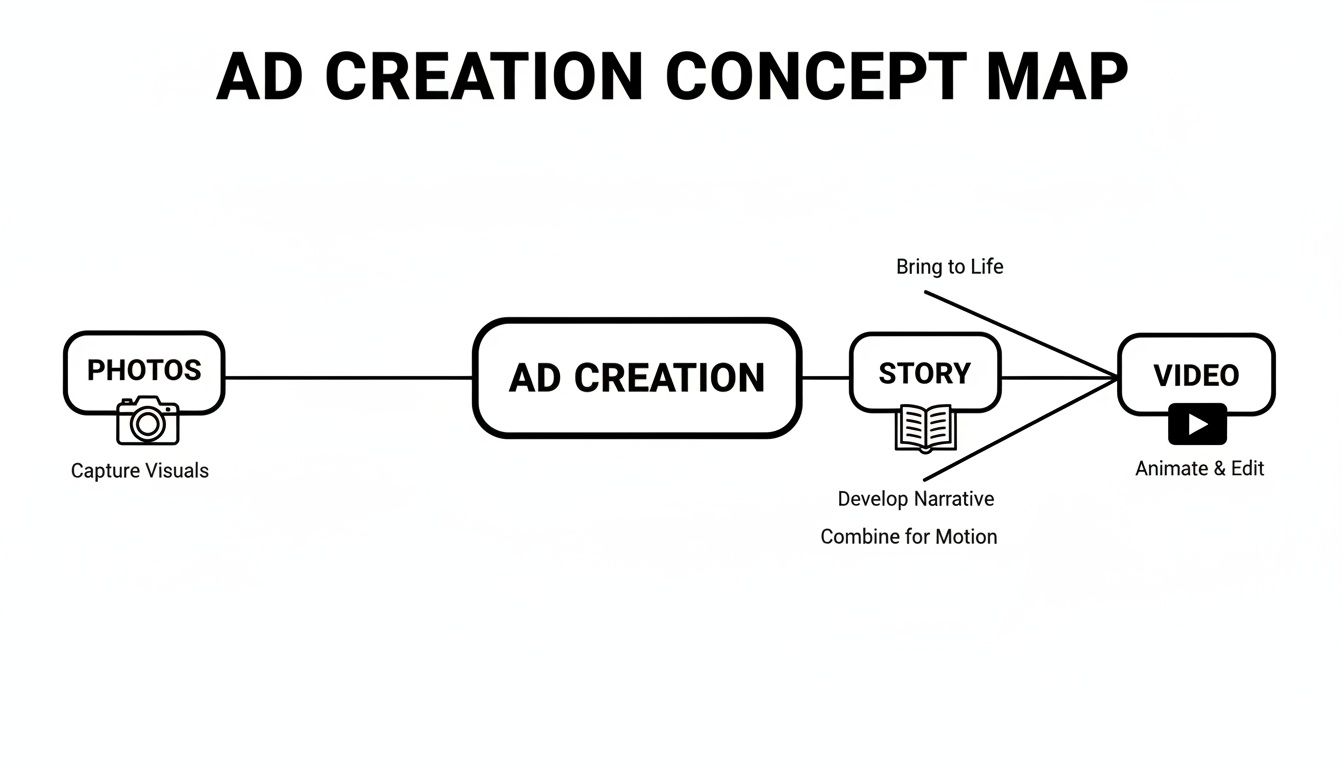
Ultimately, no matter which platform you choose, a compelling ad always boils down to these three powerful storytelling elements.
To help you decide where to invest your budget, let's break down the heavy hitters.
Digital Platform Strengths for Real Estate Ads
| Platform | Primary Use Case | Targeting Capability | Best Ad Format |
|---|---|---|---|
| Google Ads | Capturing active searchers (high-intent leads) | Keyword-based (what people are searching for) | Search Ads, Display Ads |
| Facebook & Instagram | Building awareness and creating demand | Demographic, interest, and behaviour-based | High-quality Video, Carousel, Image Ads |
| YouTube | Engaging visual storytelling and property tours | Demographic, interest, and viewing habits | Video Ads (In-stream, In-feed) |
| Property Portals | Reaching buyers on dedicated real estate sites | Platform-specific (e.g., featured listings) | Enhanced Listings, Display Banners |
Each platform serves a different purpose, and the most successful campaigns often use a strategic mix to cover the entire buyer journey.
Google Ads: Your Go-To for Active Buyers
Google Ads is all about capturing intent. When someone types "3-bedroom homes for sale in Kelowna" into the search bar, they aren't just window shopping—they are actively in the market. They've raised their hand and are telling you exactly what they want.
Your job is to be the best answer to their question. By targeting hyper-specific keywords like "downtown Kelowna condos with a lake view," you can put your listing directly in front of highly motivated buyers the moment they start looking.
Facebook & Instagram: Where Lifestyle Sells
Over on Facebook and Instagram, the game is completely different. People aren't here to search; they're here to scroll, connect, and be entertained. Your mission? Stop that scroll cold with an image or video that makes them say, "Wow."
This is where your stunning visuals become your greatest asset. A breathtaking drone shot of a Penticton property overlooking the lake or a slick video tour of a modern Vernon townhome can spark desire.
The real power of these platforms lies in their targeting. You can zero in on audiences based on age, location, income, and even life events like getting married or having a new baby. This lets you put that perfect family home in front of couples who are likely starting a family.
It's a proactive strategy. You're introducing a home to potential buyers who didn't even know they were looking… until they saw your ad.
Property Portals: The Digital Showroom
You absolutely cannot ignore major property portals like Realtor.ca or Zillow. These are the specialized marketplaces where serious buyers and sellers gather. Being listed here is simply non-negotiable.
While your creative freedom is more limited, these platforms provide unmatched visibility to a massive, built-in audience of active home shoppers. Many also offer paid advertising options, allowing you to feature your listing prominently and give it an extra boost.
This visibility is especially crucial in a tight market. With new home listings plunging over 17% year-over-year in some regions, the competition for buyer attention is fierce. Leveraging platforms like Google and Facebook becomes essential to stand out.
Choosing the right platform mix is about being strategic. It’s about showing up where your ideal clients are already spending their time online. If you need a hand building a multi-platform plan that drives real results, we can help you put it all together.
Budgeting and Measuring What Actually Matters
Let's talk about the part that often makes business owners a bit nervous: the budget. How much should you actually spend on real estate advertising? Honestly, there’s no magic number. It all comes down to the property, your market, and what you’re trying to achieve.
A smart approach is to anchor your ad spend to the property's value and your potential commission. You'd naturally put more muscle behind a luxury waterfront listing in Kelowna than a starter condo. The key is to start with a figure that lets you test the waters.
But what you do after you spend the money is what really counts. Just tossing your budget at a few ads and crossing your fingers isn't a strategy—it’s a great way to waste cash. You have to know what's working.
Turning Numbers into a Story
This is where tracking makes all the difference. You don't need to be a data scientist, but understanding a few key metrics will tell you the story of your campaign.
Here are the big ones, explained simply:
-
Cost Per Click (CPC): This is exactly what it sounds like—how much you pay each time someone clicks on your ad.
-
Click-Through Rate (CTR): This is the percentage of people who saw your ad and were compelled to click. A high CTR is a great sign that your photos and copy are grabbing attention.
-
Conversion Rate: This is the most important one. It’s the percentage of people who clicked your ad and then took the action you wanted them to, like filling out a contact form.
Knowing these numbers helps you stop guessing and start making smart decisions. It’s how you turn advertising from an expense into a real, measurable investment.
Connecting Ads to Showings and Sales
The whole point is to connect your digital efforts to real-world results. If you spend $500 on a Facebook ad campaign, you need to know how many inquiries or booked showings came directly from it. This is how you calculate your Return on Investment (ROI).
When you can confidently say, "For every dollar I put into this campaign, I got five dollars back in potential commission," you’ve cracked the code. You've built a predictable system for growing your business.
This is why having a clear process for tracking leads is so critical. When a new inquiry comes in, make it a habit to ask how they found you. Use unique phone numbers or dedicated landing pages for different ad campaigns. These simple habits provide the data you need.
If digging into analytics isn't your cup of tea, you're not alone. That's exactly where a partnership comes in handy. Working with a team that specializes in PPC advertising management means you have experts handling the numbers for you. They set up the tracking, analyze the data, and make sure every dollar of your budget is working as hard as it possibly can.
Putting It All Together: A Kelowna Condo Example
Theory is great, but let's be honest, seeing how all these pieces click into place is where it gets interesting. So, let’s walk through a practical example of how a smart advertising strategy actually comes to life.
Imagine a brand-new condo development just finished in downtown Kelowna. It’s sleek, modern, and perfectly positioned to attract young professionals who want that vibrant, walkable lifestyle.

Building the Foundation First
Before we'd even think about spending a single ad dollar, we’d start with the foundation. This means creating a strong brand identity that speaks directly to that young professional crowd—think clean lines, modern fonts, and a tone that’s energetic.
Next up, the website. It has to be fast, mobile-friendly, and absolutely beautiful. We’d make sure it’s packed with stunning professional photos, detailed floor plans, and immersive virtual tours that let people “walk through” a unit right from their laptop.
Launching a Targeted Ad Campaign
With the website ready to capture leads, we can flip the switch on the advertising. The whole point is to meet our ideal buyers where they’re already spending their time.
-
Social Media Ads: We'd get targeted video ads running on Instagram and Facebook. These wouldn't be boring slideshows. We’re talking about short, dynamic videos showcasing the incredible lake views and the easy walk to local breweries. We’d aim these right at people in specific age ranges and professions who have shown interest in downtown living.
-
Google Search Ads: At the same time, we'd launch a Google Ads campaign to catch people who are actively looking. When someone searches for "new condos Kelowna," our ad would be right there at the top of the page.
Measuring What Matters Most
Every ad—whether it’s on Facebook or Google—would lead back to a specific landing page on the website. This page would have one clear job: get the visitor to book a viewing.
By tracking every click, every page visit, and every form submission, we can connect the dots. We can show the developer exactly how much they spent, how many qualified leads their advertising generated, and what their cost per lead was.
This kind of clarity is what makes or breaks a campaign. In a market where active listings might be up 9% year-over-year and inventory sits around a 3.5–4 months' supply, a focused multi-channel campaign is what cuts through the noise. It’s what lets you find serious buyers.
This is the kind of partnership we thrive on—working closely with a client to turn a clear plan into real, measurable success. If you're ready to see how a strategic approach can work for your properties, we’d love to connect.
Your Real Estate Advertising Questions Answered
We get asked about the nuts and bolts of real estate advertising all the time. To help you get started, we’ve put together a few answers to the questions we hear most often.
How Much Should I Budget for Real Estate Advertising?
This is the million-dollar question, but there's no single magic number. Your budget will really depend on your market, the property's value, and what you’re trying to achieve. A solid rule of thumb is to think of your ad spend as a small percentage of your potential commission.
The key, though, is the return on investment (ROI) you get. Start with a manageable budget you can test with, track your results like a hawk, and then double down on what’s actually working. The goal is to build a predictable system where every dollar you put in brings back more in return.
What’s More Important: Photos or Ad Copy?
That's like asking if a car needs an engine or wheels—they’re both crucial and work as a team! Incredible photos are what stop potential buyers from scrolling past your listing. But it's the compelling ad copy that convinces them to take the next step.
Let's be clear: high-quality, professional photography is non-negotiable. It’s what creates that powerful first impression. Your words, however, are what build the emotional connection. They tell the story of the home and guide a potential buyer from casual interest to actually booking a showing. One just doesn't work without the other.
Can I Do All My Real Estate Advertising Myself?
Absolutely, and many successful agents start out by managing their own ads. But as your business grows, you'll quickly find that running effective digital campaigns becomes a full-time job in itself.
It demands constant learning to keep up with algorithm changes, not to mention the time needed for testing, analyzing data, and tweaking your campaigns. Partnering with an expert frees you up to focus on what you do best: serving your clients and closing deals.
We can handle the technical side for you, making sure your campaigns are always optimized and delivering the results you need.
If you're ready to turn your advertising into a predictable lead-generation machine without the headache, the team at Navigator Multimedia can build a strategy that works for you. Let's talk about what's possible.