How to Create an Email Newsletter That People Actually Read
So, you're thinking about starting an email newsletter. Good. It really boils down to four simple things: picking the right email tool, getting people to sign up, making it look like you, and writing stuff people actually want to read. Think of it as your own private channel to your customers, one that isn't bossed around by social media's crazy algorithms.
Why an Email Newsletter Is Your Secret Weapon
Let’s be real for a minute. The idea of starting a newsletter can feel… like a lot. If you’re a small business owner in Kelowna, you're already juggling a million things. Who has the time to add another marketing task to the list? It's easy to wonder where you'd even start.
But here’s what I've seen over and over: a newsletter is one of the best, most personal tools you can possibly have. It's your own little club, a direct line to people who have raised their hand and said, "Yes, I want to hear from you." You own that list. You control the message.
A Real-World Example From the Okanagan
I remember working with a fantastic tourism business out in Penticton that felt completely stuck. They were posting on social media every single day, but it felt like shouting into the wind. Engagement was flat, and they weren’t building any real connection. Honestly, they were just burnt out.
We helped them launch a simple monthly newsletter. Nothing fancy—just real stories from their adventures, some behind-the-scenes photos, and a small, exclusive offer for subscribers. The change was incredible. People started replying to their emails, sharing their own stories, and, most importantly, booking tours. They built a real community, one email at a time.
That's the magic of a newsletter. It turns a faceless audience into real people and builds relationships that stick. You're starting a conversation, not just yelling about a sale.
What You'll Learn in This Guide
Creating a newsletter is way more doable than you might think. I've laid out this guide to feel less like a boring textbook and more like we're figuring it out together. We're going to cover everything, step by step, in plain English.
Here’s a quick look at what we’ll cover:
Setting Up the Foundation: We'll look at choosing the right tools and how to start growing your email list from zero.
Designing With Heart: This is all about creating a look that feels authentic to your brand.
Writing That Connects: We’ll break down how to craft subject lines and stories that people actually look forward to.
Sending With Confidence: We'll figure out the best times to send and how to make sense of the results.
By the end, you'll have a clear, actionable plan to create an email newsletter that not only looks great but actively helps your business grow. And if you ever feel stuck or just want a partner to handle the techy bits, our team is always here to help you get started.
Let's dive in.
Getting Your Newsletter Off the Ground
Alright, let's get our hands dirty. Before you can send out that first awesome newsletter, you need two key things: a place to build it, and a list of people who are genuinely interested in what you have to say.
It might seem like a huge job, but I promise it's simpler than it looks. Let's break it down.
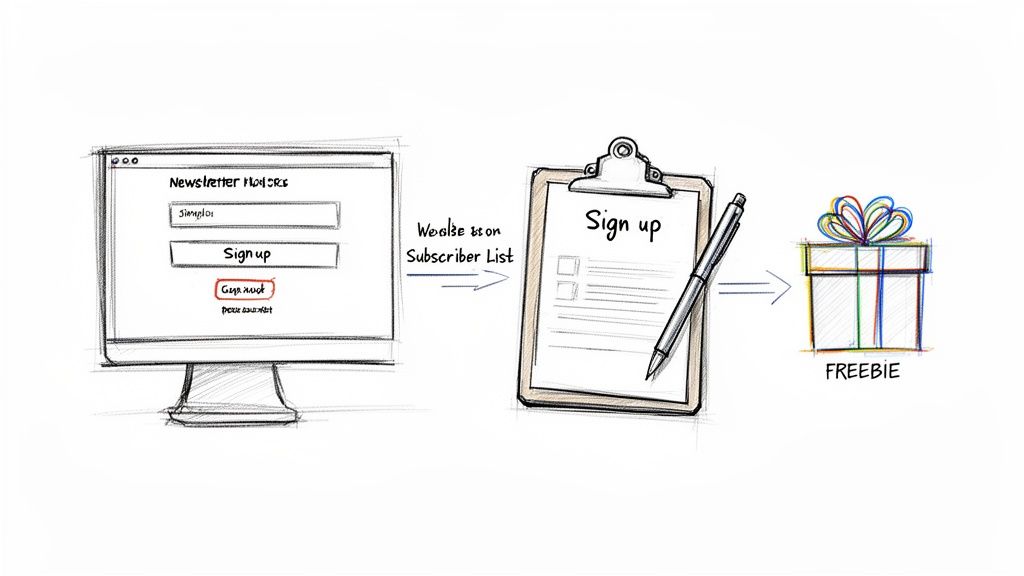
We'll start with the tools. This is where you'll design your emails, manage your subscribers, and see what's actually working.
Choosing Your Email Marketing Platform
Think of your email marketing platform as your newsletter's mission control. It's the software that handles all the technical stuff, from sending emails to tracking results, so you can focus on making great content.
There are a ton of options out there, and honestly, it can feel a little overwhelming. The good news? Most of them are designed to be super user-friendly. When our team builds websites on platforms like WordPress or Shopify, we always make sure our client’s email tool connects perfectly. It just makes life easier for everyone.
When you're looking at platforms, here are a few key things to watch for:
An easy-to-use editor: You want something with a drag-and-drop editor that lets you build professional-looking emails without needing to know any code.
Simple list management: The software should make it easy to add new subscribers and watch your list grow.
Clear analytics: You need to see the important numbers—like who opened your email and what they clicked on. We’ll get more into that later.
Choosing the right tool from the start will save you so many headaches later. It should feel helpful, not like another complicated thing you have to learn. For a deeper look at some of our favourites, explore our breakdown of the best email marketing platforms that are perfect for small businesses.
Growing Your Email List From Scratch
Now for the big question: how do you get people to sign up? This is where you can get a little creative. The goal is to make it super easy and appealing for people to give you their email address.
You're basically offering them something valuable in exchange for permission to show up in their inbox. This is where so many Okanagan businesses we've worked with find success.
Make It Easy to Sign Up on Your Website
Your website is the best place to grow your subscriber list. People are already there because they're interested in what you do, so make it obvious how they can stay in the loop.
Here are a few simple ways to grab their attention:
A simple pop-up: A gentle pop-up that appears after someone has been on your site for a bit can work really well. Just make sure it’s easy to close!
A form in your footer: Adding a "Join Our Newsletter" form to the bottom of every page is a classic for a reason. It's always there but never in the way.
A dedicated sign-up page: Create a special page that explains exactly what subscribers will get. You can then link to this page from your social media bios or even your email signature.
Offer Something They Can't Resist
People are way more likely to subscribe if they get something valuable right away. In the marketing world, this is called a lead magnet or a "freebie."
It doesn't have to be complicated at all. For example:
A West Kelowna winery could offer a guide to the "Top 5 Picnic Spots in the Okanagan."
A real estate agent could provide a downloadable checklist for "Preparing Your Home for Sale."
An online store could give a 10% discount on a customer's first purchase.
I once saw a local shop in Vernon with a simple, hand-written sign-up sheet by the cash register. They just asked customers if they'd like to be the first to know about new stuff. It’s amazing how well these simple, real approaches work. You don't need a huge marketing budget to start building a loyal community.
Designing a Newsletter People Love to Open
Think of your newsletter's design as its digital handshake. It’s the first impression you make in a crowded inbox, and it can turn a simple email into something that feels like it could only have come from you. Getting this right is about making your readers feel comfortable, welcome, and actually excited to see what you have to share.
It’s easy to get distracted by fancy templates, but the real goal here is authenticity. Your newsletter should look and feel like a natural extension of your brand, whether someone just walked out of your shop in West Kelowna or is scrolling through your website late at night.
Let’s walk through how to build a template that’s not just pretty but also super effective and easy to read.
Start with Mobile First—Always
Where do you usually read your emails? If you’re like most people, it's on your phone while you're waiting for coffee or in between meetings. Your customers are no different.
This is a huge deal. A whopping 80% of Canadians open their emails on a smartphone. That means a mobile-first design is absolutely essential. When a newsletter is optimized for mobile, it can see up to a 30% higher open rate. On the other hand, a broken design with tiny text or images that won’t load can get your emails sent straight to spam.
A mobile-first approach means you design for the smallest screen first. If it looks great on a phone, it's going to look great everywhere else. This simple shift in thinking makes sure everyone has a good experience, no matter what device they're using.
Keep Your Branding Consistent
Consistency is what builds trust. When your newsletter uses the same logo, colours, and fonts as your website and your actual store, you create a seamless and professional experience. It immediately tells your subscribers they’re in the right place.
You don't need to overdo it. Just stick to the basics:
Your Logo: Place it right at the top in the header. It should be the first thing people see.
Brand Colours: Use your main brand colour for important things like headings and links. Then, stick to one or two accent colours to keep things from looking messy.
Fonts: Choose one font for your headings and another clean, easy-to-read font for your main text. Simple is always better.
This is all about being instantly recognizable. Nailing this is a big part of what we do with our graphic design for the web services, helping businesses right here in the Okanagan create a consistent look across every single place they meet their customers.
Create a Clean and Clear Layout
Have you ever opened an email that was just a giant wall of text? You probably closed it right away. A good newsletter layout does the opposite—it guides the reader’s eye, making your content easy to scan and enjoy.
Use clear headings, short paragraphs, and lots of white space to give your content room to breathe.
Here’s a quick look at how a few simple newsletter design choices can affect how your readers interact with your content.
Key Design Elements and Their Impact
| Design Element | Why It Matters | Simple Tip |
|---|---|---|
| A Single-Column Layout | It’s the most mobile-friendly option, period. It ensures your content stacks nicely on any screen, so no one has to do that annoying side-scrolling. | Stick to one column for your main content. It’s clean, simple, and guarantees a good reading experience for everyone. |
| High-Quality Images | Photos break up text and add a ton of visual interest. They can tell a story faster than words can, especially for a tourism business in Penticton. | Optimize your images! Large files will make your email load super slowly. Most email platforms have built-in tools to help you resize them. |
| Clear Call-to-Action Buttons | You want your readers to do something—read a blog post, look at a product, etc. A button makes that next step totally obvious and easy. | Use a contrasting colour for your buttons and write clear, action-focused text like "Shop the Collection" or "Book Your Tour." |
At the end of the day, great design gets out of the way. It lets your amazing content shine and makes it a real pleasure for your subscribers to spend a few moments with you.
Crafting Content That Truly Connects
Now for the best part—the actual words that fill your newsletter. If your design is the handshake, your content is the conversation that comes next. This is where you build the kind of newsletter that people actually look forward to opening.
It all starts the moment your email hits their inbox.
Write Subject Lines That Spark Curiosity
Let's be honest: your subject line has one job. Just one. It needs to get someone to open your email. That's it. In an inbox that's overflowing, it has to stand out just enough to earn that click without sounding like spam.
Think of it as the headline on a magazine cover. It should be interesting, clear, and hint at the good stuff waiting inside.
Here are a few styles that work really well:
Be direct and helpful: "Our Top 5 Picnic Spots in West Kelowna"
Create a little mystery: "The One Thing Every Homeowner Forgets…"
Make it personal: "A Quick Question for You, [First Name]"
Offer something exclusive: "Your Subscriber-Only Discount Is Here"
A little personality goes a long way here. Don't be afraid to use an emoji or a playful tone if it matches your brand. The goal is to sound like a human, not a robot.
Focus on Value and Storytelling in Your Copy
Okay, they’ve opened it. Awesome! Now what? Your main content needs to deliver on the promise your subject line just made. This is your chance to build a real connection, and the best way to do that is by being genuinely helpful and real.
People don’t want to be sold to all the time. They want to feel like they're part of something, like they're getting an inside look.
Your newsletter is a conversation, not a commercial. Give your subscribers something they can't get anywhere else—your unique perspective, your expertise, or a peek behind the curtain of your business.
So, what does that actually look like?
Share behind-the-scenes glimpses: Show photos of your team setting up for an event in Penticton or a sneak peek of a new product you’re working on.
Tell a story: Talk about a recent customer success or a challenge you solved. Stories are how we connect with each other.
Offer exclusive tips: If you’re a real estate agent, share a quick tip on staging a home. If you run a local café, share a simple coffee-making trick.
Promote with grace: When you do have something to sell, frame it as a solution or an opportunity for your subscribers.
Keep your paragraphs short and punchy. Use headings to break up the text, and write like you talk. Reading your email should feel easy and fun, not like homework.
Make Your Content More Relevant with Personalization
Personalization is so much more than just putting [First Name] in the greeting. It's about sending the right message to the right person at the right time. When you make your content feel like it was written just for them, people pay attention.
The best way to do this is through segmentation. This is just a way of dividing your main list into smaller, more focused groups based on their interests or what they've done in the past.
Let's say you're a real estate agent in Kelowna. You could segment your list into:
First-Time Homebuyers: Send them content about mortgage pre-approvals, neighbourhood guides, and what to expect during their first purchase.
Potential Sellers: Share articles on home valuation, tips for increasing curb appeal, and market updates for their specific area.
Past Clients: Keep them in the loop with home maintenance tips, local market trends, and maybe even some referral offers.
By sending more relevant content, you show your subscribers that you get them. It builds amazing trust and makes you look like a true expert in their eyes.
Guide Them with a Clear Call to Action
Every single email you send should have a point. What do you want your reader to do next? Your call to action (CTA) is what gently points them in that direction.
A good CTA is clear, short, and compelling. It needs to be easy to spot and tell the reader exactly what will happen when they click. Instead of a vague "Click Here," try something more specific and action-focused.
Here's a quick checklist for a strong CTA:
Is it action-oriented? Use strong verbs like "Get," "Discover," "Book," or "Shop."
Is it easy to find? Use a button with a contrasting colour to make it pop.
Is the value clear? "Book Your Free Consultation" is way better than just "Submit."
Is there just one primary CTA? Don't give your readers too many choices. Focus on the single most important action you want them to take.
Whether you're sending them to a new blog post or inviting them to an event, a well-made CTA turns a passive reader into an active participant. If you ever feel like your website isn’t helping you with this, we can help you turn it into a tool that works for you. Just get in touch and we can chat about it.
Hitting Send and Measuring What Matters
You've done the hard work. You’ve designed a beautiful template and written some amazing content. Now for the fun part… hitting "Send."
But before you do, let's talk about making sure it arrives with the most impact. It seems like a small thing, but when you send your newsletter can make a huge difference. After that, we’ll look at the numbers to see what’s actually working.
Timing, Consistency, and the Pre-Flight Check
Think about your own inbox. There are certain times of the day you're more likely to read emails, right? The same goes for your audience. Being thoughtful about your send time shows you respect their schedule.
Recent Canadian email marketing data shows that Tuesdays and Thursdays often get the best results, with people opening emails most in the morning between 8-10 AM and again in the evening from 6-8 PM. Keeping a consistent schedule—say, once a week or every two weeks—also helps people look forward to your emails.
Before you schedule anything, it’s a great idea to run through a quick pre-flight checklist. Catching a small mistake before it goes out to hundreds of people is a huge win. We do this for every single client campaign.
Here’s what to look for every single time:
Proofread one last time: Seriously, read your content out loud. It’s amazing how many typos you’ll catch this way.
Click every single link: Make sure your buttons and links go exactly where they’re supposed to. A broken link is a missed opportunity.
Check it on mobile and desktop: Send a test email to yourself and open it on your phone and your computer. Does it look great on both?
Confirm your subject line: Is it clear, compelling, and free of typos? This is your first and only chance to make an impression.
This little ritual takes five minutes but can save you from a lot of "oops" moments. It's all about making sure every interaction with your customers is a positive one.
Making Sense of Your Email Analytics
Okay, the email is sent. High five! But your job isn’t quite done. Now you get to see how it did. This is where you put on your detective hat and look at the data.
Don't worry, you don’t need to be a data expert. Most email platforms show this information in a really clear, simple way. You just need to focus on a few key numbers to understand what your audience is enjoying.
The Metrics That Really Matter
It's easy to get lost in all the numbers, but there are really only three that give you a great snapshot of your newsletter's health.
Open Rate: This is the percentage of people who opened your email. A high open rate means your subject line worked! It grabbed their attention and made them curious enough to click.
Click-Through Rate (CTR): This tells you what percentage of people who opened your email also clicked on at least one link inside. This is a huge sign of engagement. A strong CTR means your content was interesting and your call-to-action worked. To go a bit deeper on this, check out our guide on what a click-through rate is and why it's so important.
Unsubscribe Rate: This is the percentage of people who chose to leave your list after getting this email. Don't panic when you see this number! A few unsubscribes on every send is totally normal. It just means you’re cleaning your list so it's full of people who are truly your biggest fans.
By looking at these three numbers after every email, you'll start to see patterns. Maybe subject lines with questions get more opens. Maybe emails with a personal story get more clicks.
This data is your roadmap for getting better. It helps you make smarter decisions for your next email. This is a big part of the partnership we build with our clients—we help them analyze this data and turn those insights into real results for their business.
So, What's Next for Your Newsletter?
You've got the roadmap. From planning your first email to hitting 'send' and seeing the results, you now have a solid plan for creating a newsletter that actually works. But this is where the real fun begins.
The secret isn't in one perfect email. It's in being consistent. Think of each newsletter as another conversation, another chance to show your audience you understand them and can offer something they really care about.
Stay Authentic, Stay Consistent
Building a newsletter that gets results won't happen overnight. It’s an investment, but honestly, it's one of the most powerful marketing tools you can have. The key is to be yourself. Be helpful. Let the unique personality of your brand shine through in every email.
Remember why people signed up: they want to hear from you. When your newsletter feels less like a sales pitch and more like a real update from someone they trust, you'll have subscribers who actually look forward to your emails. That's how you build real relationships.
This is your own private channel, a direct line to the people who matter most to your business. Whether you’re based in Kelowna, Vernon, or anywhere across the beautiful Okanagan, this connection is what turns a casual visitor into a loyal customer.
Need a Hand Bringing It All Together?
Feeling excited but a little overwhelmed by the tech or how to connect this to your website? That's completely normal, and it's exactly where we can help. We live and breathe this stuff, and we love helping local Okanagan businesses turn great ideas into real growth.
There’s nothing better than seeing a fellow local business connect with their audience and succeed. Our team can handle the technical setup and strategy, making sure your email marketing is a powerful tool that lets you get back to what you do best: running your business.
If you’re ready to put this plan into action, let's talk. Reach out to us and we can figure out the next steps together.
Got Questions? We've Got Answers
Alright, let's tackle some of the big questions we hear all the time from business owners right here in the Okanagan. If you're just starting out with a newsletter, you've probably wondered about these things yourself.
It’s totally normal to have these "what ifs" pop up. Let's clear them up so you can move forward with confidence.
How Often Should I Actually Send This Thing?
This is the number one question, and the honest answer is… it depends. The most important thing isn't how often you send, it's being consistent. Whether you decide on weekly, bi-weekly, or monthly, the key is picking a schedule you can actually stick to.
For most businesses, sending a newsletter once or twice a month is a great place to start. It’s often enough to stay on your audience's mind without bugging them. You want to be a welcome guest, not a pest.
What Do I Do When People Unsubscribe?
First, take a deep breath and don't take it personally. It's so easy to see an unsubscribe as a rejection, but it's not. Believe it or not, it's actually a good thing.
Think of it as your email list cleaning itself up. When someone leaves, it means you're only sending emails to people who are truly interested in what you have to say. This keeps your engagement rates healthy and leaves you with a list of your most loyal fans.
An unsubscribe just means that person wasn't the right fit for your community right now. Focus on the people who stick around—they're the ones who will really help your business grow.
How on Earth Do I Keep Coming Up with Content Ideas?
Ah, the fear of the blank page. It's real. The best way to beat it is to stop thinking about creating "content" and start thinking about having conversations. What are the questions your customers are always asking you?
Answer a common question. Pick one and explain it in detail.
Share a behind-the-scenes look. Show people how you made that new product or finished a recent project.
Tell a customer story. Everyone loves hearing about a happy customer.
Spotlight a service. Break down a specific thing you offer and explain exactly who it helps.
Your everyday work is a goldmine of great ideas. You just have to start paying attention to them.
At Navigator Multimedia, we believe your email newsletter should be a powerful tool that builds relationships and grows your business—not just another thing on your to-do list. If you're ready to create a newsletter that truly connects with your audience and gets results, we're here to help make it happen. Let's build something great together.