A Guide to PPC Advertising Management
You’ve probably heard the term ‘PPC’ tossed around, but what does it actually mean for your business? Think of PPC advertising management as having an expert captain steering your online advertising ship. It’s the whole process of dreaming up, launching, and constantly tweaking your ad campaigns on places like Google to make sure every dollar you spend is working its hardest for you.
What Is PPC Advertising Management Anyway?
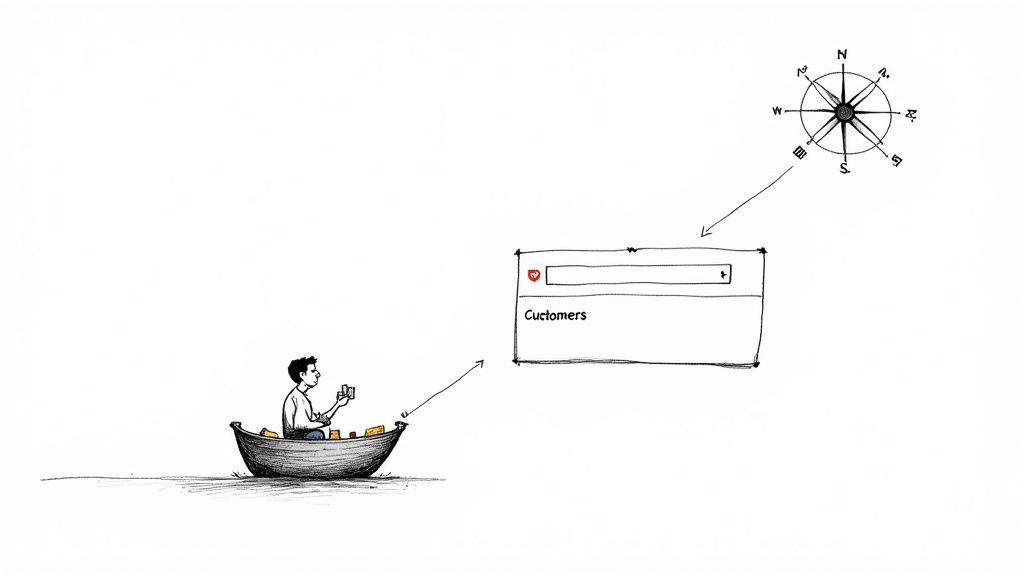
Let's break it down. Imagine you run an awesome local business right here in Kelowna. You want your name to pop up at the very top of a Google search the second a potential customer is looking for what you offer. That’s the magic of PPC, or Pay-Per-Click—you only pay when someone is interested enough to click on your ad.
But here’s the catch: just turning on ads isn’t a strategy. Without someone who knows what they're doing, you can burn through your budget in a flash with very little to show for it. This is where the "management" part is so, so important.
PPC advertising management is the ongoing work of making your ads smarter, more efficient, and more profitable. It’s about turning your ad spend from a hopeful guess into a predictable tool for growth.
This is a hands-on process… definitely not a "set it and forget it" task. It’s making sure every piece of the puzzle—from the keywords to the ad copy to the landing page—is working together to bring you real, measurable results.
The Core Parts of PPC Management
So, what does a PPC manager really do all day? It boils down to a few key things:
-
Strategy and Planning: This is the foundational stuff—deeply understanding who you want to reach, what they’re searching for, and figuring out the right message to grab their attention.
-
Campaign Building: This is the hands-on setup. It involves structuring your account, picking the right keywords, and writing compelling ad copy that makes people want to click.
-
Constant Monitoring: We keep a close eye on performance. Are we getting clicks? And more importantly… are those clicks turning into leads and sales?
-
Optimizing and Adjusting: This is where the real expertise comes in. It’s making continuous little tweaks to improve results, like pausing ads that aren’t working and putting that budget toward the ones that are.
It's a demanding job for a reason. Digital advertising spending in Canada is on track to blow past $16 billion by 2025, and search ads are the biggest slice of that pie. Getting this right means you're tapping into a massive stream of potential customers.
As a team that is certified by Google to manage AdWords accounts, we've seen firsthand what it takes to cut through the noise and get our clients noticed, whether they're in West Kelowna, Vernon, or anywhere in between.
Building Your First Campaign From the Ground Up
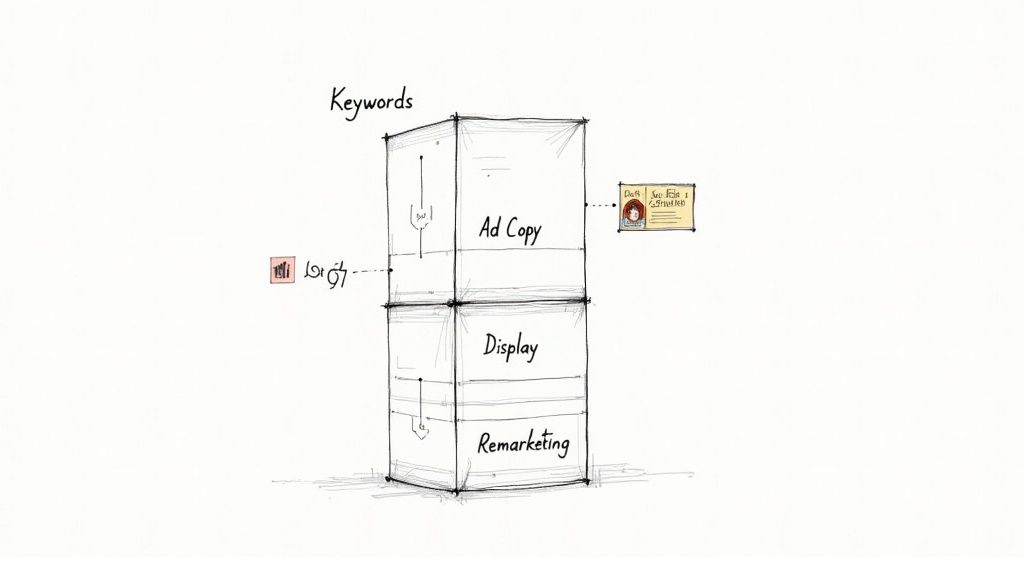
Okay, let's get our hands dirty and build your first campaign. It might feel like a huge task, but it all comes down to a few key decisions. Think of it like putting together IKEA furniture—if you follow the instructions and put the right pieces together in the right order, you’ll end up with something sturdy and effective.
The very first step is deciding what kind of campaign you actually need. There are a few different types, and each one is a different tool for a different job.
Choosing Your Campaign Type
Before you do anything else, ask yourself: what am I trying to achieve? Are you trying to catch someone the exact moment they’re searching for your services? Or are you hoping to build brand recognition with people who might not even know you exist yet? Your answer here will point you straight to the right campaign.
Here are the heavy hitters:
-
Search Campaigns: This is the classic PPC ad. When someone types a search into Google, your text-based ad pops up at the top of the results. It's the perfect tool for capturing people with high intent—they already know they have a problem and are actively looking for a solution right now.
-
Display Campaigns: Ever notice those visual, banner-style ads on blogs, news sites, or even YouTube? That’s the Google Display Network. These campaigns are fantastic for building brand awareness. Imagine you’re a Penticton winery trying to attract summer tourists—a beautiful photo of your vineyard appearing on a popular travel blog is a powerful way to get on their radar.
-
Remarketing Campaigns: This one is super clever. It lets you show targeted ads specifically to people who have already visited your website. It’s like a friendly digital tap on the shoulder, reminding them about that product they were looking at or the service they were considering.
To help you decide, we've put together a quick comparison table tailored for businesses right here in the Okanagan.
Choosing the Right PPC Campaign for Your Business
| Campaign Type | Best For | Example Scenario |
|---|---|---|
| Search | Generating immediate leads and sales from high-intent customers. | A West Kelowna plumber wants to show up first when someone searches for "24/7 emergency plumbing repair near me." |
| Display | Building brand awareness and reaching a broad audience visually. | A new Vernon cafe wants to show enticing photos of their coffee and pastries on local news sites and food blogs. |
| Remarketing | Re-engaging past website visitors to recover abandoned carts and close sales. | A Kelowna e-commerce store shows an ad with a 10% discount code to users who added a product to their cart but didn't check out. |
This table should give you a clearer picture of where to start. Each campaign type has its own strengths, and the most successful strategies often use a mix of all three.
Getting Your Campaign Structure Right
Once you’ve picked your starting campaign type, it’s time to get organized. A well-structured campaign is the absolute secret to effective PPC advertising management. You'll want to create different ad groups for different services or product themes.
For instance, a local plumber might have one ad group focused on "emergency plumbing" and another for "hot water tank installation." This simple separation is a game-changer because it lets you write hyper-specific ads for each search. The person with a burst pipe sees an ad that screams, "24/7 Emergency Plumber," while someone planning an upgrade sees a message about "Efficient Hot Water Tank Installs."
A thoughtful campaign structure is your foundation. It ensures the right message gets to the right person at the right time, which means your ad budget goes so much further.
From there, it’s all about writing ad copy that stands out. Your headline needs to grab their attention, and the description has to quickly convince them you’re the solution. And don't forget your ad extensions! These are little extra snippets of info like your phone number, location, or links to specific pages, and they can seriously boost your click-through rate. In fact, we put together a simple guide to Google Ad Extensions that breaks it all down.
Building a campaign from scratch takes a bit of planning, but getting these fundamentals right from the start sets you up for long-term success. You're building a solid foundation that you can test, refine, and improve over time.
Managing Your Budget, Bids, and Audience
Alright, let's talk about the part that often makes business owners a little nervous: the money. How much should you actually spend on ads? What in the world is a ‘bid,’ anyway? And how do you make sure the right people are even seeing your ads?
Deep breaths. We’ve got this.
Deciding on a budget can feel like a huge commitment, but it’s simpler than you might think. The key is to start with a figure that’s comfortable for your business. It’s about making a smart, calculated investment to gather data and see what works.
For many of the small businesses we work with here in the Okanagan, we use an initial budget to test the waters. This gives us enough runway to figure out which keywords are driving phone calls and which ad copy is getting the most attention. From there, we can make informed decisions about where to scale up.
Making Sense of Bids and Budgets
Once you have a daily or monthly budget in mind, the next piece of the puzzle is bidding. Think of it like a silent, lightning-fast auction that happens every time someone searches on Google. Your bid is the maximum amount you’re willing to pay for one click on your ad.
This is where things can get a bit technical, but the main idea is straightforward: you tell Google how you want to spend your money.
-
Manual Bidding: You set the maximum cost-per-click (CPC) for your ads yourself. This offers tons of control but demands constant watching and adjusting.
-
Automated Bidding: You let Google's smart algorithms adjust your bids for you based on your campaign goals, like getting the most clicks or conversions. This is a massive time-saver and often the most efficient route.
Understanding your cost-per-click is critical to managing your budget. If this is new territory for you, we have a helpful article that breaks down what cost-per-click is and how it affects your ad spend.
The good news for Canadian businesses is that our market often allows for more cost-effective campaigns. The average CPC in Canada recently sat around $0.87, which is a lot lower than the global average.
Finding Your Perfect Audience
Now, this is where the real magic happens. Pouring money into ads is useless if the wrong people are seeing them. Effective PPC advertising management is all about precision targeting—getting your message in front of the people most likely to become your next great customer.
Imagine you own a high-end kitchen renovation company in Kelowna. You don’t want your ads showing up for university students looking for cheap apartment furniture. You want to reach homeowners in specific neighbourhoods who have shown an interest in home improvement.
Targeting is like having a superpower. It lets you filter out all the noise and focus your budget exclusively on people who are genuinely interested in what you offer.
Here’s how we can zero in on your ideal customer:
-
Demographics: You can target based on age, gender, household income, and more.
-
Location: This is a game-changer for local businesses. We can show your ads specifically to people in Vernon, West Kelowna, or even just a few postal codes.
-
Interests and Behaviours: We can target people based on their online habits, like what they search for, the types of websites they visit, or the videos they watch on YouTube.
By layering these targeting options, you create an incredibly powerful filter. You stop wasting money on irrelevant clicks and start connecting with an audience that’s primed and ready to hear from you. It’s a smarter way to spend your marketing dollars.
How to Know If Your PPC Ads Are Working

So, you’ve got ads running. The little green light is on, and Google is happily spending your money. But… is it actually doing anything for your business? This is the moment of truth in PPC advertising management.
It's easy to get lost in a sea of confusing reports, drowning in acronyms and charts. We’re going to cut through that noise and get straight to what matters—the numbers that tell you if you’re making money or just making Google richer.
Think of it like the dashboard of your car. You don’t need to be a mechanic to know if you’re running out of gas or if the engine is overheating. Same idea here.
Looking Beyond Just Clicks
The first number everyone looks at is clicks. It’s exciting to see hundreds of people clicking your ad! But a click, by itself, doesn’t pay the bills. It's just the starting point.
To get the real story, we need to look a little deeper. Here are the main metrics we watch for our clients, translated into plain English.
-
Click-Through Rate (CTR): This is just the percentage of people who saw your ad and actually clicked on it. A high CTR is a great sign—it means your ad is compelling and connecting with what people are searching for.
-
Cost Per Click (CPC): This one is exactly what it sounds like: how much you pay every time someone clicks. Keeping an eye on this is crucial for managing your budget.
-
Conversion Rate: This is the big one. It’s the percentage of those clickers who took the action you wanted them to, whether that's filling out a contact form, buying something, or calling your business.
See a high CTR but a low conversion rate? That tells us something important. It means we’re great at getting people to the door, but something is stopping them from coming inside. Maybe the landing page is confusing, or the offer isn't quite right.
The goal is to connect the dots. We want to see how a click on an ad for a local Kelowna business actually turns into a ringing phone or a new project. That’s when you know your investment is paying off.
What Do Good Results Even Look Like?
It always helps to have a benchmark. Across Canada, the average click-through rate for search ads is around 1.91%, and the average conversion rate is about 2.55%. What's really telling is that 65% of clicks on keywords with buying intent go to paid ads. This shows just how powerful these campaigns can be when you nail the targeting.
These numbers give you a rough compass. If your conversion rate is way below the average, it’s a clear signal that something needs a closer look.
The Most Important Number of All
At the end of the day, there’s one number that matters more than all the others: Cost Per Acquisition (CPA).
This tells you exactly how much it costs, in ad spend, to get one new customer or qualified lead. If you’re a contractor in Penticton and you know a new kitchen renovation is worth thousands, a CPA of $100 is a fantastic return.
Tracking your CPA is how you genuinely measure the success of your PPC advertising management. It shifts the conversation from "how many clicks did we get?" to "how much business did we generate?" It’s the ultimate measure of whether your ads are a worthwhile expense or a profitable investment.
If figuring all this out feels overwhelming, you’re not alone. Turning confusing data into a clear action plan is what we do best. If you need a partner to help make sense of the numbers, you can always get in touch with us.
Common PPC Pitfalls and How to Avoid Them
Everyone makes mistakes, especially when diving into something as complex as PPC. The good news? You don't have to learn every lesson the hard way. Think of this section as a friendly heads-up, pointing out the biggest potholes on the road to a successful ad campaign.
We've seen it all over the years, and most of the truly costly mistakes boil down to just a few common slip-ups. By learning to spot these ahead of time, you can save yourself a ton of money, time, and frustration.
The "Set It and Forget It" Trap
This is, without a doubt, the biggest and most expensive mistake a business can make. It’s tempting to get your campaign set up, flick the switch, and just assume it’s working its magic in the background. But a PPC campaign isn't a crockpot; it's more like a high-performance race car that needs constant attention and fine-tuning.
Without regular check-ins, you’re flying blind. You won’t know which keywords are burning through cash without bringing in leads, or which ads just aren't connecting with your audience. Effective PPC advertising management is an active, ongoing process. It's all about monitoring, testing, and tweaking to make sure your investment is actually growing your business.
Sending Good Traffic to a Bad Page
You could write the most brilliant, compelling ad in the world, but if it sends people to a confusing, slow, or irrelevant page on your website, you’ve just wasted a click. We call the page a person lands on after clicking an ad a landing page, and its job is simple: make it incredibly easy for the visitor to take that next step.
Your ad makes a promise, and your landing page needs to deliver on it instantly. If someone clicks an ad for "emergency plumbing in Kelowna," they'd better land on a page that immediately confirms they're in the right place, with a big, clear phone number to call for help.
If your landing page is just your generic homepage, or if it's slow to load and clunky on a phone, people will hit the back button in seconds. It’s like inviting someone over for dinner and then making them search the whole house to find the kitchen.
Using Keywords That Are Too Broad
When you're first starting out, it seems logical to target broad keywords to reach the most people. For instance, a local shoe store in Penticton might try to bid on the keyword "shoes." The problem is, this is like casting a giant net into Okanagan Lake hoping to catch one specific type of fish.
You’ll end up paying for clicks from people all over the country looking for all sorts of things you don't sell. The key is to get specific.
-
Broad Keyword: "shoes" (This is expensive and attracts tons of irrelevant clicks.)
-
Specific Keyword: "women's running shoes Penticton" (Much cheaper and attracts a potential buyer.)
-
Even Better: "Brooks running shoes for women near me" (This person is likely ready to buy right now.)
Getting specific with your keywords is the fastest way to stop wasting money and start reaching people who are actually looking for what you offer. It takes a bit more thought up front, but the payoff is huge. If you need a partner to help you steer clear of the potholes, our team is always here to help you navigate the road.
Your PPC Management Action Plan
Alright, you've soaked up the what, why, and how of PPC. Now it's time to roll up your sleeves and put it all into practice. This is your roadmap—a clear, step-by-step plan to get your PPC campaigns off the ground or fine-tune the ones you're already running.
Think of this as your guide to making that next move with confidence. We’ll walk through the big decisions, like whether to go it alone or bring in help, and share some specific tips for our local Okanagan industries. Let's get you moving.
DIY or Partner Up: The Big Decision
First things first: who is going to be in the driver's seat? It's a fundamental question for any business owner, and honestly, there's no one-size-fits-all answer. It really boils down to your time, your expertise, and your budget.
Going the DIY route gives you complete control, and you'll learn an incredible amount. But let's be real—it's a massive time sink. It's the daily check-ins, the constant learning curve, and the deep dives into data to figure out what's actually working.
Partnering with an agency, on the other hand, frees you up to do what you do best: run your business. You get a team of specialists who live and breathe this stuff. They already know the common pitfalls and have the tools to get you results much faster. The trade-off is the management fee, but a good partner should deliver a return that easily covers their cost.
The choice comes down to this: right now, do you have more time or more money to invest? Be honest with yourself about your resources and what you can realistically handle.
If you're leaning toward getting expert help to make sure your investment is sound from day one, we’d be happy to chat about what that could look like. You can always get in touch with our team to see if we’re a good fit.
Your Step-by-Step Launch Checklist
Whether you decide to fly solo or team up with a pro, the foundational steps are the same. Here’s a simple checklist to guide you from a brilliant idea to a live campaign.
-
Set Clear, Measurable Goals: What does success actually look like? Is it 10 new leads every month? A 20% bump in online sales? Write it down and make it real.
-
Define Your Ideal Customer: Get specific. Where in the Okanagan do they live? What are their hobbies? What problems are they trying to solve that you can help with?
-
Do Your Keyword Research: Use tools to discover the exact phrases your customers are typing into Google. Focus on specific, high-intent searches.
-
Structure Your Campaign Logically: Create different ad groups for each of your main services or products. This keeps your messaging sharp and effective.
-
Write Compelling Ad Copy: Your ad is your first handshake. Make a clear promise and include a strong, direct call to action. Tell them what to do next!
-
Build a Great Landing Page: The page you send traffic to must be clean, load quickly, and make it simple for visitors to take that next step.
-
Set Up Conversion Tracking: This is non-negotiable. You must know which clicks are turning into actual customers. Without it, you're flying blind.
Following this checklist ensures you’re building your campaign on a solid foundation, not just guesswork. It's the best way to steer clear of common, costly mistakes—like using keywords that are far too broad or sending valuable traffic to a page that just doesn't convert.
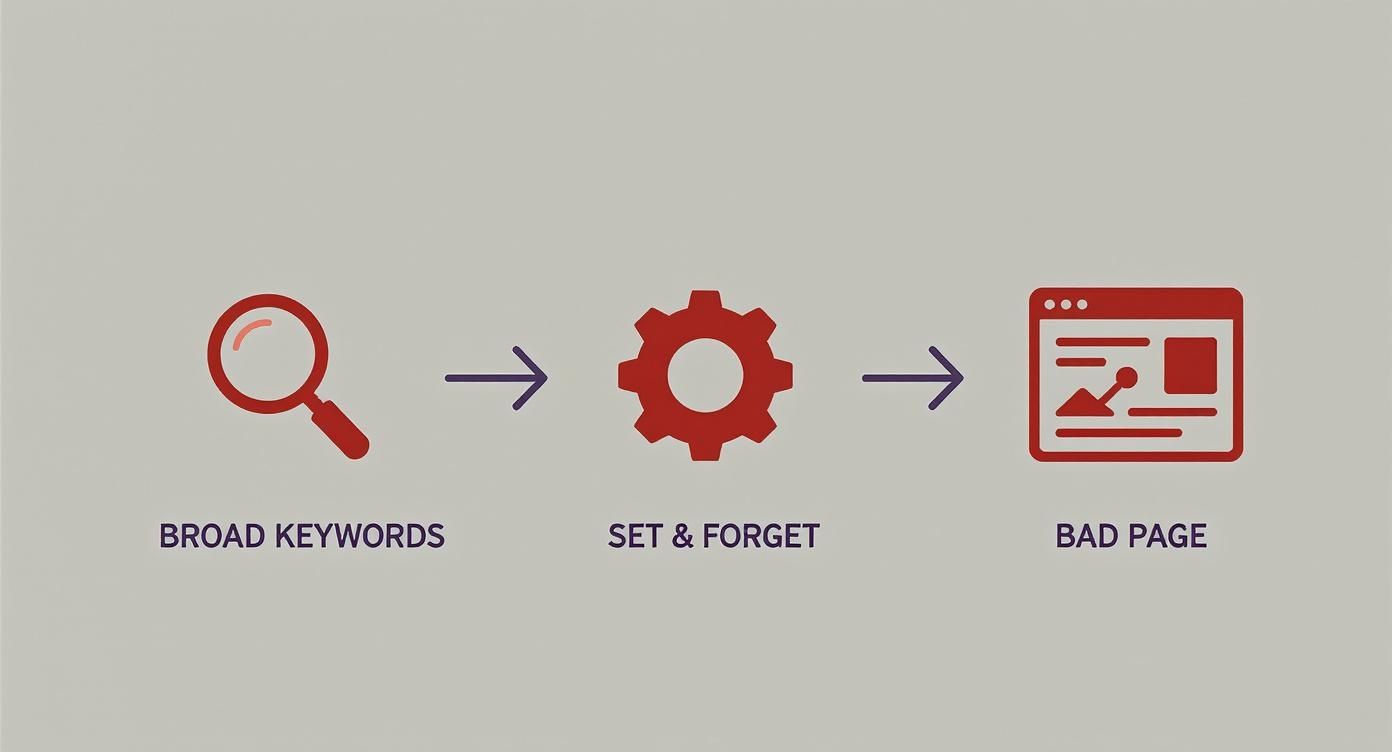
This simple visual shows just how easy it is for a few small missteps to lead to a complete dead end, burning through your ad budget with nothing to show for it.
Quick Tips for Okanagan Businesses
Let's bring this home. The principles of good PPC are universal, but how you apply them in our own backyard makes all the difference.
-
For Tourism Operators (Kelowna, Penticton): Target your ads geographically to the cities your visitors come from, like Vancouver or Calgary. Use stunning Display ads to sell the Okanagan lifestyle. Come spring, fire up remarketing campaigns to remind past visitors it's time to book this year's summer trip.
-
For Real Estate Agents (Vernon, West Kelowna): Your keywords need to be hyper-local. Instead of a broad term like "houses for sale," get specific with bids on phrases like "family homes for sale in Mission Hill" or "lakeview properties in West Kelowna." Use ad extensions to prominently display your phone number for immediate calls.
Taking these thoughtful, strategic steps will put you miles ahead. It’s all about focusing on what will actually move the needle for your business. And if you need a hand turning this action plan into reality, we’re right here to help you get started.
Your Top PPC Questions, Answered
Over the years, we've heard just about every question there is when it comes to PPC. We’ve pulled together a few of the most common ones we get asked. If these are on your mind, you're in good company!
How Long Does It Take to See Results From PPC Advertising?
This is probably the number one question we get, and for good reason. PPC can start sending traffic to your website almost the moment your ads go live. That instant feedback is a huge plus.
But there's a difference between traffic and real business results, like qualified leads or sales. The first month is really about gathering crucial data—seeing what search terms people actually use, which ads they click on, and what happens once they land on your site. You'll likely see some early wins, but the real, consistent results typically start to show up within two to three months as we fine-tune the campaign based on that initial data.
How Much Should I Budget for My First PPC Campaign?
There's no single right answer here, as your ideal budget is tied to your industry, location, and goals. For instance, bidding on keywords in a competitive market like Kelowna will require a different budget than in a smaller, less crowded town.
A good way to frame it is to work backward: what is a new customer worth to your business? Many of the small businesses we work with find a sweet spot starting between $500 and $1,500 per month. This gives us enough runway to test different approaches and gather meaningful data without you having to commit a massive investment upfront.
Think of your initial budget as an investment in data. That data is what allows us to confidently scale your campaigns for long-term, profitable growth.
Can I Just Use Google's 'Smart Campaigns' and Let It Run?
It's a tempting shortcut, right? Google has made Smart Campaigns incredibly easy to set up, which is great for business owners who are stretched thin and just want to get something running.
The trade-off for that simplicity, however, is control. You give up the ability to fine-tune your audience targeting, hand-pick your keywords, and strategically manage your bids. To make every dollar in your budget count and ensure you’re reaching the right customers—not just any customers—a hands-on, professionally managed approach to PPC advertising management almost always delivers better results.
If you're looking for clear, straightforward answers and a strategy built for your unique business goals, Navigator Multimedia is here to help. Let's connect and map out a plan that works for you.